
APE : alerte générale sur les emplois à La Réunion, résultat de l’aliénation
9 juin, parRisque d’anéantissement des emplois liés à la production de richesses à La Réunion


According to the Niels Bohr Institute at the University of Copenhagen
5 February 2011
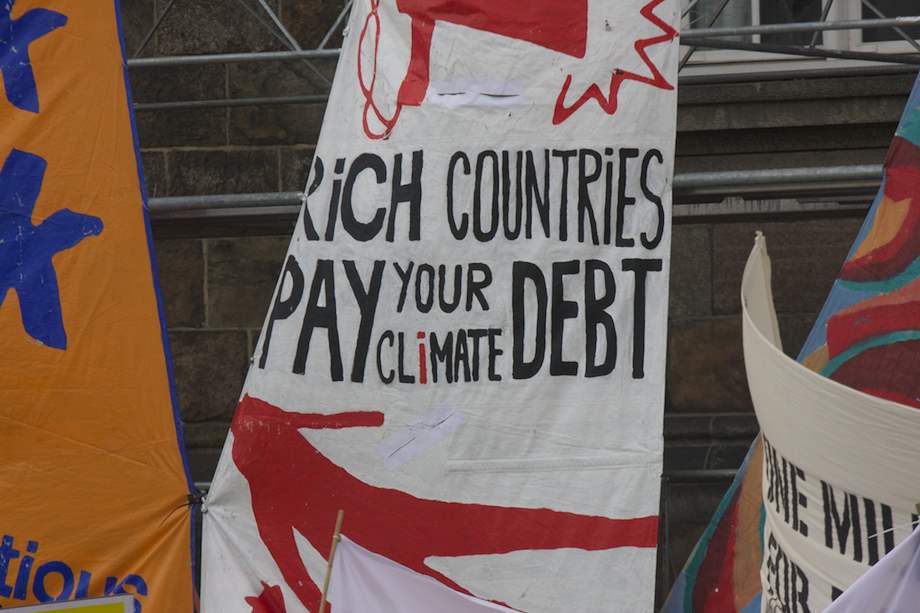
The fear that global temperature can change very quickly and cause dramatic climate changes that may have a disastrous impact on many countries and populations is great around the world. But what causes climate change and is it possible to predict future climate change? New research from the Niels Bohr Institute at the University of Copenhagen shows that it may be due to an accumulation of different chaotic influences and as a result would be difficult to predict. The results have just been published in Geophysical Research Letters. Following, an article published in Niels Bohr Institute website:
For millions of years the Earth’s climate has alternated between about 100,000 years of ice age and approximately 10-15,000 years of a warm climate like we have today. The climate change is controlled by the Earth’s orbit in space, that is to say the Earth’s tilt and distance from the sun. But there are also other climatic shifts in the Earth’s history and what caused those?
By analysing the ice cores that are drilled through the more than three kilometer thick ice sheet in Greenland, scientists can obtain information about the temperature and climate going back around 140,000 years.
The most pronounced climate shifts besides the end of the ice age is a series of climate changes during the ice age where the temperature suddenly rose 10-15 degrees in less than 10 years.
The climate change lasted perhaps 1000 years, then - bang – the temperature fell drastically and the climate changed again. This happened several times during the ice age and these climate shifts are called the Dansgaard-Oeschger events after the researchers who discovered and described them.
Such a sudden, dramatic shift in climate from one state to another is called a tipping point. However, the cause of the rapid climate change is not known and researchers have been unable to reproduce them in modern climate models.
"We have made a theoretical modelling of two different scenarios that might trigger climate change. We wanted to investigate if it could be determined whether there was an external factor which caused the climate change or whether the shift was due to an accumulation of small, chaotic fluctuations", explains Peter Ditlevsen, a climate researcher at the Niels Bohr Institute.
He explains that in one scenario the climate is like a seesaw that has tipped to one side. If sufficient weight is placed on the other side the seesaw will tip – the climate will change from one state to another. This could be, for example, an increase in the atmospheric content of CO2 triggering a shift in the climate.
In the second scenario the climate is like a ball in a trench, which represents one climate state. The ball will be continuously pushed by chaos-dynamical fluctuations such as storms, heat waves, heavy rainfall and the melting of ice sheets, which affect ocean currents and so on. The turmoil in the climate system may finally push the ball over into the other trench, which represents a different climate state.
Peter Ditlevsen’s research shows that you can actually distinguish between the two scenarios and it was the chaos-dynamical fluctuations that were the triggering cause of the dramatic climate changes during the ice age. This means that they are very difficult to predict.
But what about today – what can happen to the climate of the future? "Today we have a different situation than during the ice age. The Earth has not had such a high CO2 content in the atmosphere since more than 15 million years ago, when the climate was very warm and alligators lived in England.
So we have already started tilting the seesaw and at the same time the ball is perhaps getting kicked more and could jump over into the other trench. This could mean that the climate might not just slowly gets warmer over the next 1000 years, but that major climate changes theoretically could happen within a few decades", estimates Peter Ditlevsen, but stresses that his research only deals with investigating the climate of the past and not predictions of the future climate.
Peter Ditlevsen is associate professor, with a Ph.D in theoretical physics and a doctoral degree in Turbulence and Climate Dynamics.
Peter Ditlevsen is researching in chaotic systems and turbulent flow. He has focused on understanding the climate system and how ice-core measurements and other observa-tions can provide information on present and past climate changes.
Peter Ditlevsen has authored more than 50 scientific papers, two books and several popular articles. He teaches physics at the Niels Bohr Institute.
Risque d’anéantissement des emplois liés à la production de richesses à La Réunion

Mézami mi rapèl lo tan nou téi koné fé gran-gran lopérassion : kissoi bann miltiplikassion plizyèr shif, kissoi bann divizion, kissoi mèm lo (…)

L’ouverture aux services de l’Accord de partenariat économique (APE) entre l’Union européenne, les Comores, Madagascar, Maurice et les Seychelles (…)

In kozman pou la rout

Communiqué officiel du 40e Conseil des ministres de la COI
Qui a dit que le peuple réunionnais était condamné à subir les schémas descendants de la mondialisation marchande et à n’être que le spectateur (…)
Au lieu de reproduire la France, les Réunionnais devraient s’inspirer de Madagascar
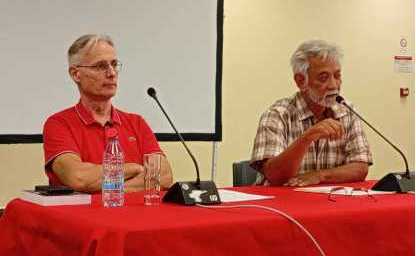
Retour sur le séminaire organisé par la Section PCR de Saint-Denis
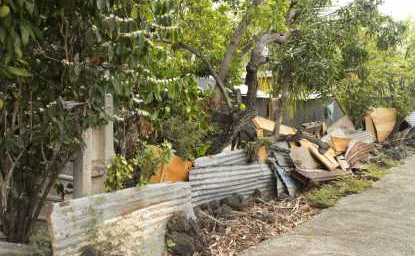
Conséquence de la crise et de la pénurie de logements sociaux
Condoléances du Parti Communiste Réunionnais
Face aux difficultés de trésorerie à cause des retards de paiement

À la veille de la manifestation organisée par des élus devant la préfecture


Forum posts
6 February 2011, 07:15, by M Lang
But Al Gore said the science on global warming was all in. He got a Nobel prize for his scientific insight so it must be true.