
APE : alerte générale sur les emplois à La Réunion, résultat de l’aliénation
9 juin, parRisque d’anéantissement des emplois liés à la production de richesses à La Réunion


United Nations Climate Talks
1 December 2011
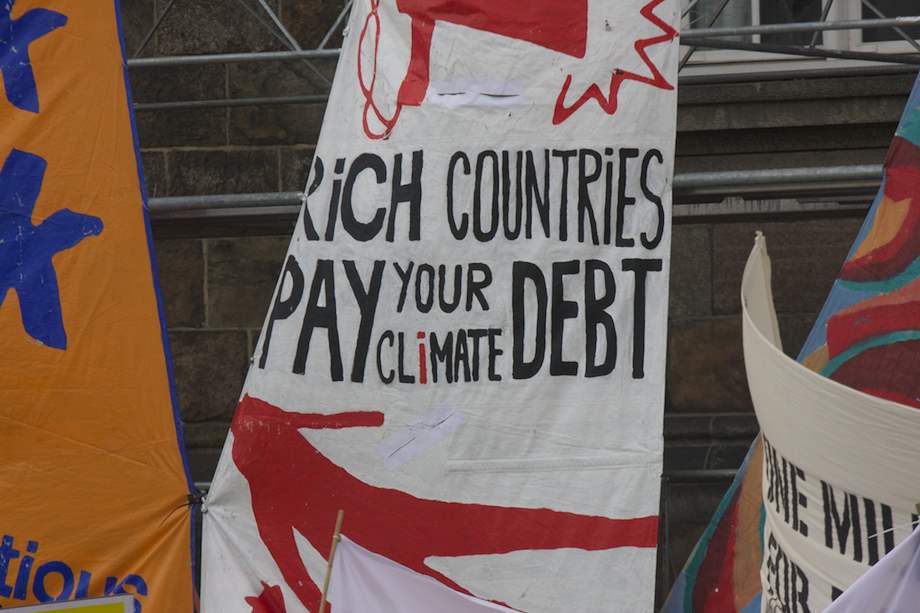
At the United Nations Climate Change Conference in Durban, South Africa (COP 17, Nov. 28 to Dec. 9, 2011), the global shipping industry, Oxfam and WWF have joined forces to suggest to governments how the further reduction of greenhouse gas emissions from international shipping might best be regulated.
Oxfam, WWF and the International Chamber of Shipping (which represents over 80% of the world merchant fleet) call on delegates to COP 17 to give the International Maritime Organization (IMO) clear guidance on continuing its work on reducing shipping emissions through the development of Market Based Measures (MBMs).
The organisations maintain that an effective regulatory framework for curbing emission of CO2 from international shipping must be global in nature and designed so as to reduce the possibility of ‘carbon leakage’, while taking full account of the best interests of developing countries and the UNFCCC principle of ‘common but differentiated responsibilities and respective capabilities’ (CBDR).
This includes the possibility of the adoption by IMO of a compensation mechanism through which a significant share of any revenues collected from international shipping could be directed to developing countries and provide a new source of finance to support their efforts to tackle climate change. Such revenues could be directed through an appropriate channel, such as the Green Climate Fund, which will be discussed by governments in Durban.
While there are some differences over the detail of such an approach, both the civil society and shipping industry organisations emphasise that the immediate priority for governments meeting at COP 17 in Durban is not to work on technical details for shipping, but to provide the signals needed to allow resolution of the key political question of how to apply CBDR in the shipping sector, and assist the speedy completion of the IMO’s work.
With respect to any carbon charges that might be proposed by governments, they agree that the recent IMO agreement on technical and operational measures[1] to reduce shipping emissions demonstrates that the IMO is eminently capable of developing a further international agreement for shipping on MBMs. In light of the urgency required to avoid catastrophic climate change, they called on all governments to take all steps necessary to expedite such an agreement at the IMO.
Quotes from participating organisations |
About Oxfam
|
Risque d’anéantissement des emplois liés à la production de richesses à La Réunion

Mézami mi rapèl lo tan nou téi koné fé gran-gran lopérassion : kissoi bann miltiplikassion plizyèr shif, kissoi bann divizion, kissoi mèm lo (…)

L’ouverture aux services de l’Accord de partenariat économique (APE) entre l’Union européenne, les Comores, Madagascar, Maurice et les Seychelles (…)

In kozman pou la rout
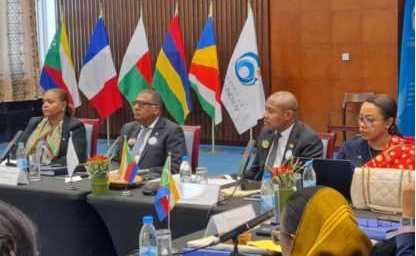
Communiqué officiel du 40e Conseil des ministres de la COI
Qui a dit que le peuple réunionnais était condamné à subir les schémas descendants de la mondialisation marchande et à n’être que le spectateur (…)
Au lieu de reproduire la France, les Réunionnais devraient s’inspirer de Madagascar
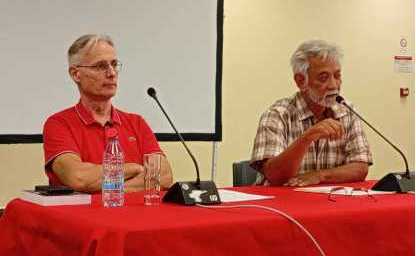
Retour sur le séminaire organisé par la Section PCR de Saint-Denis

Conséquence de la crise et de la pénurie de logements sociaux

Condoléances du Parti Communiste Réunionnais
Face aux difficultés de trésorerie à cause des retards de paiement

À la veille de la manifestation organisée par des élus devant la préfecture


