
APE : alerte générale sur les emplois à La Réunion, résultat de l’aliénation
9 juin, parRisque d’anéantissement des emplois liés à la production de richesses à La Réunion


One dollar a tonne
4 March 2010
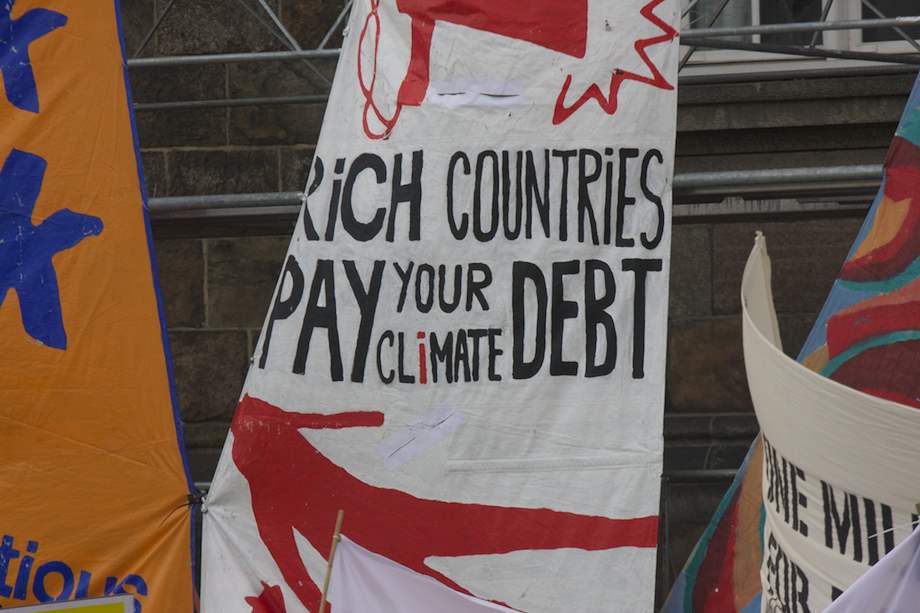
According to BusinessGrenn.com, the Indian government is expected to back up its recent commitment to curb carbon emissions with a controversial move to levy a new tax on coal in order to pay for the roll out of renewable energy technologies. «The new levy will also be watched carefully by environmental policymakers around the world, many of whom remain divided on whether a simple tax on carbon-intensive fossil fuels or a more complex emissions cap-and-trade scheme provides the most effective means of delivering economy-wide emission cuts.», said BusinessGreen.com. Following this article
The Indian government is expected to back up its recent commitment to curb carbon emissions with a controversial move to levy a new tax on coal in order to pay for the roll out of renewable energy technologies.
Speaking in his annual budget speech to the Indian parliament, finance minister Pranab Mukherjee said that a clean energy tax of 50 rupees ($1) a tonne will be leveled on all domestically produced or imported coal with the resulting revenue ring-fenced for use in a new national renewable energy fund.
"Harnessing renewable energy sources to reduce dependence on fossil fuels is now recognised as a credible strategy for combating global warming and climate change," he said.
Mukherjee also set out a range of tax breaks designed to accelerate the roll out of solar, wind and geothermal technologies. In particular, solar equipment, some wind turbine parts, and electric vehicles will be exempted from a production tax on new goods, while heat pump systems will be exempted from import duties and equipment used in solar power plants will be granted a power import tax rate of just five per cent.
The move will be welcomed as evidence of India’s commitment to meeting its voluntary target of reducing the carbon intensity of its economy by 25 per cent over the next decade.
The country has repeatedly vowed to accelerate the roll out of renewable energy technologies and last year set out proposals for an ambitious $22bn national solar plan designed to install 20,000MW of solar capacity by 2022. However, to date the country has been sketchy about how such investments will be funded and had indicated that the solar plan would have to be supported to a large extent through climate funding from industrialised nations.
The announcement also provided a boost to some of India’s leading clean tech firms, with wind turbine manufacturer Suzlon Energy and solar specialist Moser Baer India seeing their share prices climb five and 7.4 per cent respectively on the news.
The government did not provide details of how much money it expected to raise through the new coal tax, but some estimates believe around 25bn rupees ($544million) a year could be generated for investment in renewables.
"That’s a good-sized fund that will help encourage the development of cleaner energies and impose some kind of cost on users of coal," Ashutosh Pandey, New Delhi-based head of the advisory practice at Emergent Ventures, told news agency Bloomberg.
The new levy will also be watched carefully by environmental policymakers around the world, many of whom remain divided on whether a simple tax on carbon-intensive fossil fuels or a more complex emissions cap-and-trade scheme provides the most effective means of delivering economy-wide emission cuts.
In related news, a senior Chinese official today confirmed that the government is investigating whether to launch its own environmental tax. Vice environment minister Pan Yue reportedly told journalists that if adopted the tax would be revenue neutral and would be used to consolidate existing green taxes into a single levy.
Risque d’anéantissement des emplois liés à la production de richesses à La Réunion

Mézami mi rapèl lo tan nou téi koné fé gran-gran lopérassion : kissoi bann miltiplikassion plizyèr shif, kissoi bann divizion, kissoi mèm lo (…)

L’ouverture aux services de l’Accord de partenariat économique (APE) entre l’Union européenne, les Comores, Madagascar, Maurice et les Seychelles (…)

In kozman pou la rout

Communiqué officiel du 40e Conseil des ministres de la COI
Qui a dit que le peuple réunionnais était condamné à subir les schémas descendants de la mondialisation marchande et à n’être que le spectateur (…)
Au lieu de reproduire la France, les Réunionnais devraient s’inspirer de Madagascar
Retour sur le séminaire organisé par la Section PCR de Saint-Denis
Conséquence de la crise et de la pénurie de logements sociaux
Condoléances du Parti Communiste Réunionnais

Face aux difficultés de trésorerie à cause des retards de paiement

À la veille de la manifestation organisée par des élus devant la préfecture


